Wednesday, January 13, 2021

The Gift : Li-Young Lee


The Gift

To pull the metal splinter from my palm
my father recited a story in a low voice.
I watched his lovely face and not the blade.
Before the story ended, he’d removed
the iron sliver I thought I’d die from.

I can’t remember the tale,
but hear his voice still, a well
of dark water, a prayer.
And I recall his hands,
two measures of tenderness
he laid against my face,
the flames of discipline
he raised above my head.

Had you entered that afternoon
you would have thought you saw a man
planting something in a boy’s palm,
a silver tear, a tiny flame.
Had you followed that boy
you would have arrived here,
where I bend over my wife’s right hand.

Look how I shave her thumbnail down
so carefully she feels no pain.
Watch as I lift the splinter out.
I was seven when my father
took my hand like this,
and I did not hold that shard
between my fingers and think,
Metal that will bury me,
christen it Little Assassin,
Ore Going Deep for My Heart.
And I did not lift up my wound and cry,
Death visited here!
I did what a child does
when he’s given something to keep.
I kissed my father.


~ Li-Young Lee

(Li-Young Lee, “The Gift” from 'Rose')

Monday, November 2, 2020

Maya C. Popa : Dear Life..


Dear Life


I can’t undo all I have done unto myself,
what I have let an appetite for love do to me.

I have wanted all the world, its beauties
and its injuries; some days,
I think that is punishment enough.

Often, I received more than I’d asked,

which is how this works—you fish in open water
ready to be wounded on what you reel in.

Throwing it back was a nightmare.
Throwing it back and seeing my own face

as it disappeared into the dark water.

Catching my tongue suddenly on metal,
spitting the hook into my open palm.

Dear life: I feel that hook today most keenly.

Would you loosen the line—you’ll listen

if   I ask you,

if   you are the sort of  life I think you are.


~ Maya C. Popa

Monday, October 19, 2020

Before You Came.. ~ Faiz Ahmed Faiz


Faiz Ahmed Faiz with Alys Faiz


Before you came things were just what they were:
the road precisely a road, the horizon fixed,
the limit of what could be seen,
a glass of wine was no more than a glass of wine.

With you the world took on the spectrum
radiating from my heart: your eyes gold
as they open to me, slate the color
that falls each time I lost all hope.

With your advent roses burst into flame:
you were the artist of dried-up leaves, sorceress
who flicked her wrist to change dust into soot.
You lacquered the night black.

As for the sky, the road, the cup of wine:
one was my tear-drenched shirt,
the other an aching nerve,
the third a mirror that never reflected the same thing.

Now you are here again—stay with me.
This time things will fall into place;
the road can be the road,
the sky nothing but sky;
the glass of wine, as it should be, the glass of wine.


~ Faiz Ahmed Faiz 
(1911 ~ 1984)


Translated from Urdu by Naomi Lazard


Tuesday, October 13, 2020

Hilda Hilst : Nameless Songs


Hilda Hilst


May this love neither blind me nor follow me.

And may it never notice me.

May it spare me from being pursued

And from torment.

From only being so that he knows me.

May the gaze not lose itself among the tulips

Because such perfect forms of beauty

Spring from the glare of shadows.

And my Lord inhabits the glimmering dark

From a clutter of ivies on a high wall.


May his love only make me discontent

And tired of tiredness. And may I

Shrink before so many weaknesses. Small and soft

Like spiders and ants.


May this love see me only in parting.


~ Hilda Hilst

(1930 ~ 2004)

(Translated by Lavinia Saad)


Thursday, January 16, 2020

The Unknown Citizen : W.H.Auden


'Study For A Head' : Francis Bacon 


The Unknown Citizen


A Poem by Wystan H. Auden


He was found by the Bureau of Statistics to be
One against whom there was no official complaint,
And all the reports on his conduct agree
That, in the modern sense of an old-fashioned word, he was a
saint,
For in everything he did he served the Greater Community.
Except for the War till the day he retired
He worked in a factory and never got fired,
But satisfied his employers, Fudge Motors Inc.
Yet he wasn't a scab or odd in his views,
For his Union reports that he paid his dues,
(Our report on his Union shows it was sound)
And our Social Psychology workers found
That he was popular with his mates and liked a drink.
The Press are convinced that he bought a paper every day
And that his reactions to advertisements were normal in every way.
Policies taken out in his name prove that he was fully insured,
And his Health-card shows he was once in a hospital but left it cured.
Both Producers Research and High-Grade Living declare
He was fully sensible to the advantages of the Instalment Plan
And had everything necessary to the Modern Man,
A phonograph, a radio, a car and a frigidaire.
Our researchers into Public Opinion are content
That he held the proper opinions for the time of year;
When there was peace, he was for peace: when there was war, he went.
He was married and added five children to the population,
Which our Eugenist says was the right number for a parent of his
generation.
And our teachers report that he never interfered with their
education.
Was he free? Was he happy? The question is absurd:
Had anything been wrong, we should certainly have heard.


Tuesday, September 18, 2018

Vasily Grossman : 'Life and Fate'


Vasily Grossman
(1905~1964)


Somehow you could sense spring more vividly in this cool forest than on the sunlit plain. And there was a deeper sadness in this silence than in the silence of autumn. In it, you could hear both a lament for the dead and the furious joy of life itself. It was still cold and dark, but soon the doors and shutters would be flung open. Soon the house would be filled with the tears and laughter of children, with the hurried steps of a loved woman and the measured gait of the master of the house. They stood there, holding their bags, in silence.

~ 'Life and Fate'


Tuesday, September 11, 2018

Edgar Allan Poe : A Dream Within A Dream


Edgar Allan Poe 
(1809 ~ 1849)
(With his wife Viginia Clemm and
her kitty Catarina perched on him)


Take this kiss upon the brow!
And, in parting from you now,
Thus much let me avow-
You are not wrong, who deem
That my days have been a dream;
Yet if hope has flown away
In a night, or in a day,
In a vision, or in none,
Is it therefore the less gone?
All that we see or seem
Is but a dream within a dream.

I stand amid the roar
Of a surf-tormented shore,
And I hold within my hand
Grains of the golden sand-
How few! yet how they creep
Through my fingers to the deep,
While I weep- while I weep!
O God! can I not grasp
Them with a tighter clasp?
O God! can I not save
One from the pitiless wave?
Is all that we see or seem
But a dream within a dream? 

Wednesday, May 2, 2018

Adam Zagajewski : Impossible Friendships


Friendship ~ Pablo Picasso (1908)

Impossible Friendships

For example, with someone who no longer is,
who exists only in yellowed letters.

Or long walks beside a stream,
whose depths hold hidden

porcelain cups—and the talks about philosophy
with a timid student or the postman.

A passerby with proud eyes
whom you'll never know.

Friendship with this world, ever more perfect
(if not for the salty smell of blood).

The old man sipping coffee
in St.Lazare, who reminds you of someone.

Faces flashing by
in local trains—

the happy faces of travelers headed perhaps
for a splendid ball, or a beheading.

And friendship with yourself
—since after all you don't know who you are.


(Translated by Clare Cavanagh)

('Eternal Enemies' 
2008, Farrar, Straus and Giroux)


Wednesday, December 27, 2017

Marina Tsvetaeva : An Attempt at Jealousy


Seated Woman : Pablo Picasso (1960)


AN ATTEMPT AT JEALOUSY


How is your life with that other one?
Simpler, is it? A stroke of the oars
and a long coastline—
and the memory of me

is soon a drifting island
(not in the ocean—in the sky!)
Souls—you will be sisters—
sisters, not lovers.

How is your life with an ordinary
woman? without the god inside her?
The queen supplanted—

How do you breathe now?
Flinch, waking up?
What do you do, poor man?

“Hysterics and interruptions—
enough! I’ll rent my own house!”
How is your life with that other,
you, my own.

Is the breakfast delicious?
(If you get sick, don’t blame me!)
How is it, living with a postcard?
You who stood on Sinai.

How’s your life with a tourist
on Earth? Her rib (do you love her?)
is it to your liking?

How’s life? Do you cough?
Do you hum to drown out the mice in your mind?

How do you live with cheap goods: is the market rising?
How’s kissing plaster-dust?

Are you bored with her new body?
How’s it going, with an earthly woman, 
with no sixth sense?

                                                         Are you happy?
No? In a shallow pit—how is your life,
my beloved? Hard as mine
with another man?


~ Marina Tsvetaeva
(1924)

(Translated from the Russian by Ilya Kaminsky & Jean Valentine)

 Marina Tsvetaeva
 Marina

Marina Tsvetaeva
 Portrait of Marina Tsvetaeva : By Magda Nachman-Acharya (1913)


Tuesday, December 26, 2017

Ludwig Steinherr : A Good Likeness


A GOOD LIKENESS

There are no
good photos of me:
there’s always something
wrong
the lighting the distance
friends look for
likenesses
in vain –
Only that one
you triggered by chance
while hanging the camera
round your neck
(me slantwise from behind
across the overturning
mountain path plunging
out of the picture) –
but there, in turn,
I’m too much
like myself
for anyone to
recognise me


~ Ludwig Steinherr 


(Translated from German by Richard Dove)


Ludwig Steinherr


Monday, November 27, 2017

Black Stone on top of a White Stone : César Vallejo

César Vallejo


I shall die in Paris, in a rainstorm,
On a day I already remember.

I shall die in Paris-- it does not bother me--

Doubtless on a Thursday, like today, in autumn.


It shall be a Thursday, because today, Thursday

As I put down these lines, I have set my shoulders

To the evil. Never like today have I turned,
And headed my whole journey to the ways where I am alone.


César Vallejo is dead. They struck him,

All of them, though he did nothing to them,

They hit him hard with a stick and hard also
With the end of a rope. Witnesses are: the Thursdays,
The shoulder bones, the loneliness, the rain, and the roads. 


César Vallejo 
   (1892 ~ 1938)


(Translated from Spanish by Thomas Merton)

(Thanks : Ken Bullock)


Friday, November 17, 2017

So Long, Marianne! ~ Leonard Cohen


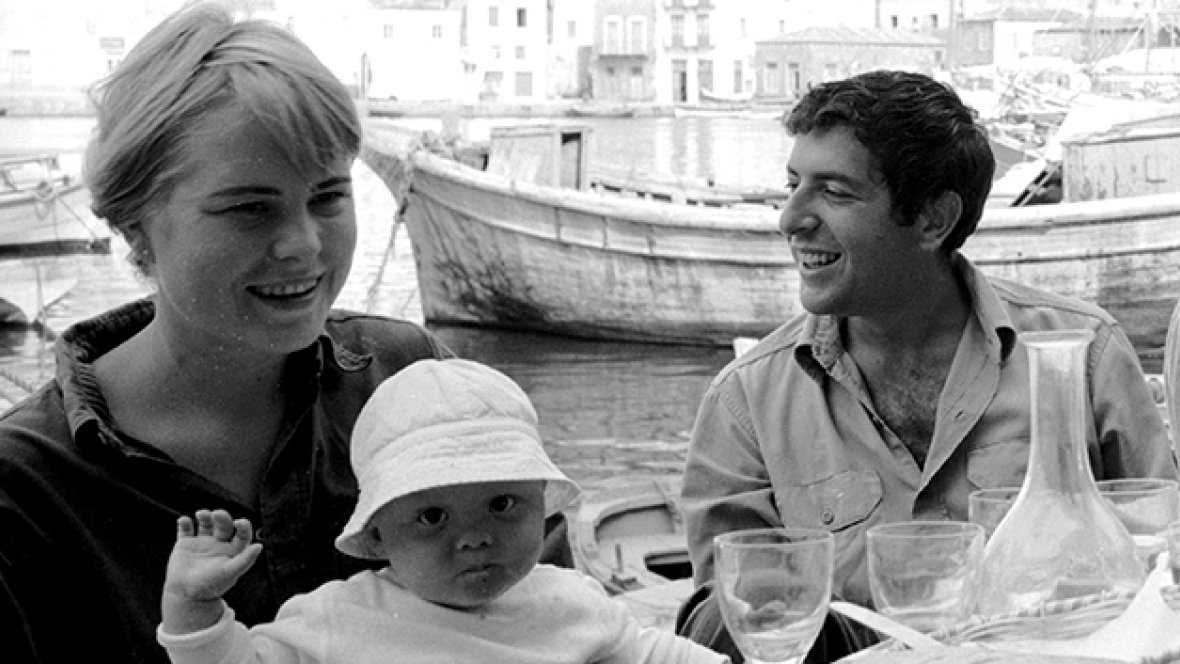
If opposites attract, it’s no wonder that the brooding poet and singer-songwriter Leonard Cohen was enchanted by the blond beauty Marianne Ihlen. A radiant young mother with long slender legs and hipbones jutting over her bikini bottom, she was light to his darkness, a bright sunny presence in his memorably gloomy days.


In March 1960, Cohen, a law school dropout and budding poet, left dismal London for the sunny paradise of Hydra, Greece. The Greek isle was at the time a haven for the era’s nascent hippie culture, with wanderers fashioning themselves as bohemian artists alongside such moneyed elite as Aristotle Onassis and Princess Margaret. The Canadian poet, lonely and despondent, found himself admiring a handsome couple strolling along, their arms linked in seemingly loving companionship. As Cohen himself would later say: “I had no idea I’d spend the next decade with this man’s wife.”


Cohen didn’t know that the man was the Norwegian novelist Axel Jensen, about to abandon the beautiful Marianne Ihlen, then 25, and their toddler son, for another woman.


Later Cohen ran into the blonde at a market, where she was shopping. He invited her to join his friends outside. Cohen, then 26, was immediately entranced, but their courtship was slow and luxurious. “Though I loved him from the moment we met, it was a beautiful, slow movie,” Ihlen recalled.


“We met when we were almost young,” Cohen would write in his famous love song inspired by his blonde muse, “So Long, Marianne,” in 1967. “Deep in the green lilac park/You held on to me like I was a crucifix/As we went kneeling through the dark.”


The two had little money, but led a romantic life of reading poetry, playing with Ihlen’s son on the beach, and singing in tavernas at night. After Cohen drove with Ihlen to Oslo so she could file for divorce from Jensen, he returned to his hometown of Montreal for the publication of a critically acclaimed book of poetry, The Spice-Box of the EarthBut he was lonely, and wanted his muse by his side. He sent Ihlen a telegraph: “Have a flat. All I need is my woman and her child.” She heeded his call, and flew to Montreal with her young son.


Cohen and Ihlen remained entangled for the next seven years, but their relationship was tempestuous. Neither was faithful, both were jealous. Ihlen would become enraged with the attention Cohen received. He spent time at the Chelsea Hotel in New York City, strumming his guitar, hanging out at Andy Warhol’s Factory, and setting the stage for his future as a singer-songwriter. She preferred the sun and gleaming white sands of Hydra.


During this time Cohen, sensing their was more money in music than literature, began a natural transition from poet to singer-songwriter. He compiled the songs for his for his debut album, Songs 
of Leonard Cohen, released in 1967, which includes “So Long, Marianne.”
It was not meant as a good-bye letter, but it certainly foreshadowed their
ultimate breakup. “Oh, so long, Marianne,” Cohen sang. “It’s time that we began to laugh/And cry and cry and laugh about it all again.”


The couple finally cracked apart in 1972, when Cohen’s girlfriend, Suzanne Eldrod, gave birth to his son. He tried to talk Ihlen into accepting the unconventional situation, but she refused and walked away from him for good. Ihlen remarried in 1979.


Though their romantic relationship ended then, Cohen and Ihlen eventually managed to arrive at a place of affection for each other. When he heard she was dying of leukemia in 2016, he wrote a sweet letter to her, according to the CBC, which read: “Well, Marianne, it’s come to this time when we are really so old and our bodies are falling apart and I think I will follow you very soon. Know that I am so close behind you that if you stretch out your hand, I think you can reach mine. And you know that I’ve always loved you for your beauty and for your wisdom … but now, I just want to wish you a very good journey. Goodbye old friend. Endless love, see you down the road.”


Marianne Ilhen died two days later, on July 29, 2016. Leonard Cohen died three months later, on November 7, 2016, in his sleep, following a fall. He was 82. His song lyrics seem like an appropriate requiem: “Oh, so long, Marianne/It’s time that we began to laugh/And cry and cry and laugh about it all again.”


Leonard Cohen with Marianne


(Courtesy : The Vintage News)