Tuesday, December 26, 2017

Ludwig Steinherr : A Good Likeness


A GOOD LIKENESS

There are no
good photos of me:
there’s always something
wrong
the lighting the distance
friends look for
likenesses
in vain –
Only that one
you triggered by chance
while hanging the camera
round your neck
(me slantwise from behind
across the overturning
mountain path plunging
out of the picture) –
but there, in turn,
I’m too much
like myself
for anyone to
recognise me


~ Ludwig Steinherr 


(Translated from German by Richard Dove)


Ludwig Steinherr


Monday, November 27, 2017

Black Stone on top of a White Stone : César Vallejo

César Vallejo


I shall die in Paris, in a rainstorm,
On a day I already remember.

I shall die in Paris-- it does not bother me--

Doubtless on a Thursday, like today, in autumn.


It shall be a Thursday, because today, Thursday

As I put down these lines, I have set my shoulders

To the evil. Never like today have I turned,
And headed my whole journey to the ways where I am alone.


César Vallejo is dead. They struck him,

All of them, though he did nothing to them,

They hit him hard with a stick and hard also
With the end of a rope. Witnesses are: the Thursdays,
The shoulder bones, the loneliness, the rain, and the roads. 


César Vallejo 
   (1892 ~ 1938)


(Translated from Spanish by Thomas Merton)

(Thanks : Ken Bullock)


Friday, November 17, 2017

So Long, Marianne! ~ Leonard Cohen


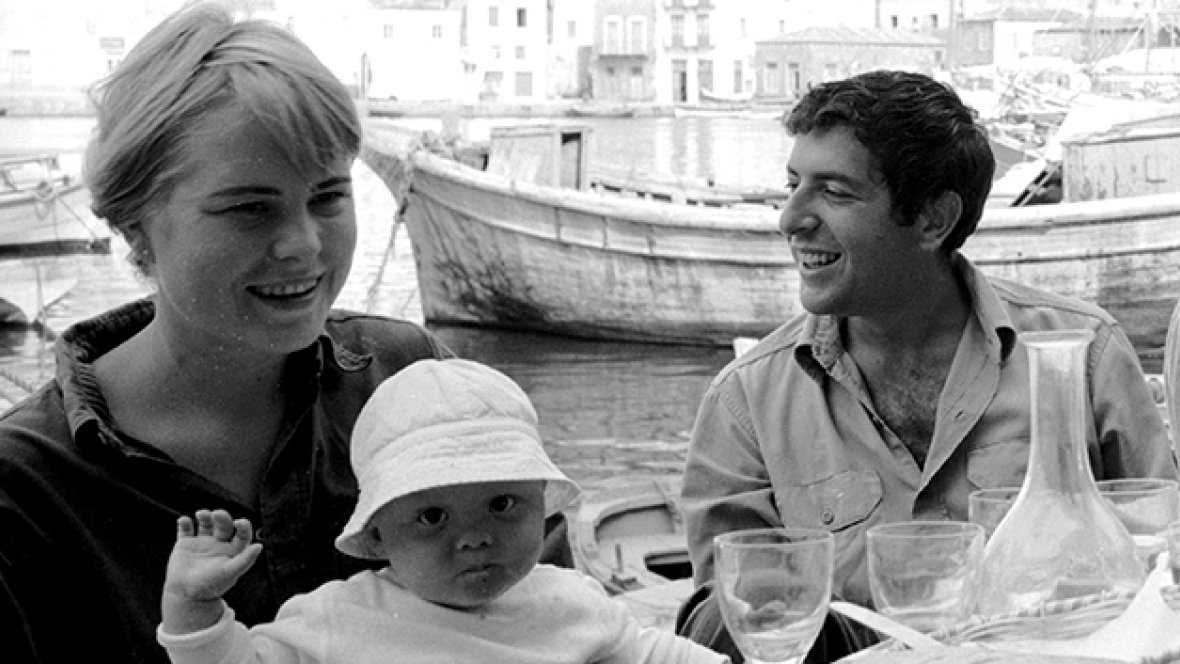
If opposites attract, it’s no wonder that the brooding poet and singer-songwriter Leonard Cohen was enchanted by the blond beauty Marianne Ihlen. A radiant young mother with long slender legs and hipbones jutting over her bikini bottom, she was light to his darkness, a bright sunny presence in his memorably gloomy days.


In March 1960, Cohen, a law school dropout and budding poet, left dismal London for the sunny paradise of Hydra, Greece. The Greek isle was at the time a haven for the era’s nascent hippie culture, with wanderers fashioning themselves as bohemian artists alongside such moneyed elite as Aristotle Onassis and Princess Margaret. The Canadian poet, lonely and despondent, found himself admiring a handsome couple strolling along, their arms linked in seemingly loving companionship. As Cohen himself would later say: “I had no idea I’d spend the next decade with this man’s wife.”


Cohen didn’t know that the man was the Norwegian novelist Axel Jensen, about to abandon the beautiful Marianne Ihlen, then 25, and their toddler son, for another woman.


Later Cohen ran into the blonde at a market, where she was shopping. He invited her to join his friends outside. Cohen, then 26, was immediately entranced, but their courtship was slow and luxurious. “Though I loved him from the moment we met, it was a beautiful, slow movie,” Ihlen recalled.


“We met when we were almost young,” Cohen would write in his famous love song inspired by his blonde muse, “So Long, Marianne,” in 1967. “Deep in the green lilac park/You held on to me like I was a crucifix/As we went kneeling through the dark.”


The two had little money, but led a romantic life of reading poetry, playing with Ihlen’s son on the beach, and singing in tavernas at night. After Cohen drove with Ihlen to Oslo so she could file for divorce from Jensen, he returned to his hometown of Montreal for the publication of a critically acclaimed book of poetry, The Spice-Box of the EarthBut he was lonely, and wanted his muse by his side. He sent Ihlen a telegraph: “Have a flat. All I need is my woman and her child.” She heeded his call, and flew to Montreal with her young son.


Cohen and Ihlen remained entangled for the next seven years, but their relationship was tempestuous. Neither was faithful, both were jealous. Ihlen would become enraged with the attention Cohen received. He spent time at the Chelsea Hotel in New York City, strumming his guitar, hanging out at Andy Warhol’s Factory, and setting the stage for his future as a singer-songwriter. She preferred the sun and gleaming white sands of Hydra.


During this time Cohen, sensing their was more money in music than literature, began a natural transition from poet to singer-songwriter. He compiled the songs for his for his debut album, Songs 
of Leonard Cohen, released in 1967, which includes “So Long, Marianne.”
It was not meant as a good-bye letter, but it certainly foreshadowed their
ultimate breakup. “Oh, so long, Marianne,” Cohen sang. “It’s time that we began to laugh/And cry and cry and laugh about it all again.”


The couple finally cracked apart in 1972, when Cohen’s girlfriend, Suzanne Eldrod, gave birth to his son. He tried to talk Ihlen into accepting the unconventional situation, but she refused and walked away from him for good. Ihlen remarried in 1979.


Though their romantic relationship ended then, Cohen and Ihlen eventually managed to arrive at a place of affection for each other. When he heard she was dying of leukemia in 2016, he wrote a sweet letter to her, according to the CBC, which read: “Well, Marianne, it’s come to this time when we are really so old and our bodies are falling apart and I think I will follow you very soon. Know that I am so close behind you that if you stretch out your hand, I think you can reach mine. And you know that I’ve always loved you for your beauty and for your wisdom … but now, I just want to wish you a very good journey. Goodbye old friend. Endless love, see you down the road.”


Marianne Ilhen died two days later, on July 29, 2016. Leonard Cohen died three months later, on November 7, 2016, in his sleep, following a fall. He was 82. His song lyrics seem like an appropriate requiem: “Oh, so long, Marianne/It’s time that we began to laugh/And cry and cry and laugh about it all again.”


Leonard Cohen with Marianne


(Courtesy : The Vintage News)


Tuesday, October 31, 2017

Annabel Lee ~ Edgar Allan Poe


Lovers In The Moonlight ~ Marc Chagall


ANNABEL LEE


It was many and many a year ago,
In a kingdom by the sea,
That a maiden there lived whom you may know
By the name of ANNABEL LEE; 
And this maiden she lived with no other thought
Than to love and be loved by me.

I was a child and she was a child,
In this kingdom by the sea; 
But we loved with a love that was more than love-
I and my Annabel Lee; 
With a love that the winged seraphs of heaven
Coveted her and me.

And this was the reason that, long ago,
In this kingdom by the sea,
A wind blew out of a cloud, chilling
My beautiful Annabel Lee; 
So that her highborn kinsman came
And bore her away from me,
To shut her up in a sepulchre
In this kingdom by the sea.

The angels, not half so happy in heaven,
Went envying her and me-
Yes! - that was the reason (as all men know,
In this kingdom by the sea) 
That the wind came out of the cloud by night,
Chilling and killing my Annabel Lee.

But our love it was stronger by far than the love
Of those who were older than we-
Of many far wiser than we-
And neither the angels in heaven above,
Nor the demons down under the sea,
Can ever dissever my soul from the soul
Of the beautiful Annabel Lee.

For the moon never beams without bringing me dreams
Of the beautiful Annabel Lee; 
And the stars never rise but I feel the bright eyes
Of the beautiful Annabel Lee; 
And so, all the night-tide, I lie down by the side
Of my darling- my darling- my life and my bride,
In the sepulchre there by the sea,
In her tomb by the sounding sea.


~ EDGAR ALLAN POE 


Thursday, October 27, 2016

The Rain ~ Kenji Miyazawa


(Photo Courtesy : www.boredpal.com)


Be not defeated by the rain. Nor let the wind prove your better.
Succumb not to the snows of winter. Nor be bested by the heat of summer.

Be strong in body. Unfettered by desire. Not enticed to anger. Cultivate a quiet joy.
Count yourself last in everything. Put others before you.
Watch well and listen closely. Hold the learned lessons dear.

A thatch-roof house, in a meadow, nestled in a pine grove's shade.

A handful of rice, some miso, and a few vegetables to suffice for the day.

If, to the East, a child lies sick: Go forth and nurse him to health.
If, to the West, an old lady stands exhausted: Go forth, and relieve her of burden.
If, to the South, a man lies dying: Go forth with words of courage to dispel his fear.
If, to the North, an argument or fight ensues: 
Go forth and beg them stop such a waste of effort and of spirit.

In times of drought, shed tears of sympathy. 
In summers cold, walk in concern and empathy.

Stand aloof of the unknowing masses:
Better dismissed as useless than flattered as a "Great Man".

This is my goal, the person I strive to become.


~ Kenji Miyazawa (1896 ~ 1933)


(Translated By David Sulz)


Early Morning Rains : Holly Duane 

(Courtesy : www.hollyduane.com)